
The first 90 days of employment are a critical, make-or-break period. A haphazard welcome can lead to disengagement, low productivity, and a revolving door of new hires. This is an expensive problem, especially for lean startups and small businesses where every team member's contribution is vital. A poor onboarding experience doesn't just cost you the recruitment fee; it costs you momentum, morale, and the full potential of the talent you worked so hard to attract.
But what if you could turn this uncertain period into a strategic advantage? This guide reveals 10 employee onboarding best practices designed to transform your new hire experience from a simple orientation into an engine for growth and retention. We move beyond the basics of a welcome lunch, offering actionable checklists, templates, and frameworks that you can implement immediately. The goal is to ensure every new team member feels welcomed, empowered, and ready to contribute from day one. To understand the foundational elements that drive successful integration, consider exploring definitions such as frontline employee onboarding best practices to see how these principles apply across different roles.
This comprehensive listicle provides a clear roadmap covering everything from pre-boarding communication and first-day planning to setting clear 90-day goals and integrating technology to scale your efforts. Let's build an onboarding program that not only retains top talent but also accelerates their impact and embeds them deeply into your company culture.
1. Build a Structured 30-60-90 Day Onboarding Program
Moving beyond an unstructured, chaotic first week is a cornerstone of effective employee onboarding best practices. A 30-60-90 day plan provides a clear, documented roadmap that transforms the new hire experience from overwhelming to empowering. This structured program breaks down the integration process into three distinct, manageable phases, each with specific goals, learning objectives, and performance milestones.
The core benefit is consistency. A documented plan ensures every new hire, regardless of their team or manager, receives a standardized, high-quality onboarding experience. This clarity reduces new-hire anxiety and accelerates their time to productivity by setting clear expectations from day one. It provides a framework for both the employee and their manager to track progress and address challenges proactively.
How to Implement a 30-60-90 Day Plan
Start by defining the focus for each phase:
-
Days 1-30: Learning and Acclimation. This phase focuses on absorbing information. Key activities include completing initial training, understanding company culture and values, meeting key team members, and learning the core tools and processes required for the role. The goal is for the new hire to feel comfortable and knowledgeable about the basics.
-
Days 30-60: Contribution and Collaboration. The focus shifts from passive learning to active contribution. The employee should begin taking ownership of smaller tasks, collaborating on team projects, and applying their initial training. This phase is crucial for building confidence and demonstrating early capabilities.
-
Days 60-90: Ownership and Initiative. In this final phase, the new hire should be operating with increasing autonomy. They should be taking initiative on projects, identifying areas for improvement, and contributing to team goals more independently. The objective is full integration and a clear path toward long-term success.
For this structure to succeed, document it in an accessible format like a shared Google Doc, a Notion page, or your project management tool. Assign clear ownership for each checklist item and schedule formal feedback sessions at the end of each 30-day milestone to discuss progress, gather feedback, and adjust the plan as needed.
2. Assigning a Dedicated Onboarding Buddy or Mentor
Formal training and manager check-ins are essential, but they often miss the informal, social, and cultural questions new hires hesitate to ask. Assigning a dedicated onboarding buddy or mentor addresses this gap by pairing a new employee with an experienced peer. This individual acts as a friendly guide, a cultural ambassador, and a go-to resource for navigating the unwritten rules and social dynamics of the workplace.
The core benefit of a buddy system is the creation of an immediate, informal support network. This peer-to-peer relationship demystifies company culture and accelerates social integration, significantly reducing feelings of isolation. For a new hire, knowing they have a designated person for "silly questions" about office etiquette, lunch spots, or communication norms is invaluable and a key component of employee onboarding best practices.

How to Implement an Onboarding Buddy Program
Start by formalizing the program to ensure consistency and effectiveness:
-
Select and Train Buddies. Choose enthusiastic, high-performing employees who genuinely embody your company values. Don't just assign this task; make it a recognized role. Provide them with a short training session on active listening, giving constructive feedback, and understanding the goals of the onboarding process.
-
Set Clear Expectations and Guidelines. Give both the buddy and the new hire a simple guide outlining the relationship's purpose. Define the expected time commitment (e.g., one coffee chat per week for the first month) and provide a checklist of topics to cover, such as introducing team members, explaining communication channels (like Slack vs. email), and sharing key company traditions.
-
Facilitate the Initial Connection. The manager should make the initial introduction on the first day to formalize the connection. Schedule the first buddy meeting (e.g., a coffee or lunch) within the first week to kickstart the relationship and ensure it doesn't fall through the cracks.
For this program to deliver results, it needs structure. Create a shared document or a dedicated Slack channel for buddies to share tips and ask questions. Schedule a brief check-in with the buddy after the first 30 days to gather feedback on the process and the new hire's integration, allowing you to fine-tune your onboarding strategy.
3. Pre-Boarding Communication and Preparation
The onboarding process shouldn't start on an employee's first day; it should begin the moment they accept the offer. Pre-boarding is the crucial period between acceptance and day one, where proactive communication and preparation can transform new hire anxiety into genuine excitement. This practice sets the stage for a smooth transition, ensuring the employee feels valued and connected before they even walk through the door.
The primary benefit of a strong pre-boarding strategy is the significant reduction in first-day jitters and administrative overload. By handling logistics, paperwork, and initial introductions in advance, the first day can be dedicated to more meaningful activities like team integration and culture immersion. This thoughtful approach is a key differentiator in creating a world-class onboarding experience, demonstrating organizational efficiency and a people-first culture from the outset.
How to Implement Pre-Boarding Communication
Start by creating a structured pre-boarding timeline and checklist:
-
Immediate Welcome (First 24 Hours): Send a personalized welcome email from their direct manager within a day of the offer acceptance. This initial touchpoint confirms their decision and opens a direct line of communication. Include details about what to expect next.
-
Logistics and Paperwork (1-2 Weeks Before Start): Create a pre-boarding portal or a secure digital package containing all necessary HR paperwork, benefits information, and the employee handbook. Companies like HubSpot use a dedicated portal to provide early access to company content, allowing new hires to learn at their own pace. This also gives IT ample time to prepare their workstation, accounts, and equipment.
-
Culture and Connection (Week of Start): Build anticipation and a sense of belonging. Send a small welcome package with company merchandise, introduce them to their assigned "onboarding buddy" via email, and share a team welcome video or a link to the company's culture deck, similar to Netflix's approach. Providing practical information like parking details, a first-day schedule, and a building map also relieves common logistical stresses.
To execute this effectively, document the pre-boarding process in a checklist assigned to the hiring manager and HR. Automate where possible, using HRIS or onboarding software to trigger emails and task reminders. A well-managed pre-boarding phase is one of the most impactful employee onboarding best practices for making a lasting positive impression.
4. Comprehensive First-Day and First-Week Planning
The first day and week are critical touchpoints that set the tone for a new hire's entire journey with your company. Comprehensive first-day and first-week planning involves deliberately designing a structured, welcoming, and productive initial experience. This approach moves beyond simply providing a laptop and a password, instead creating a detailed itinerary that makes new employees feel valued, oriented, and prepared from their very first hour.
This meticulous planning is a key differentiator in effective employee onboarding best practices. It prevents the common pitfall of new hires feeling lost, idle, or overwhelmed. A well-planned first week provides a sense of direction and purpose, affirming their decision to join your team and quickly building momentum. For example, tech giants like Apple are known for their highly orchestrated first day, which includes personalized welcome kits and a structured orientation that immediately immerses new hires in the company culture.

How to Implement a Structured First Week
Create and share a detailed itinerary before the new hire's start date to manage expectations and reduce anxiety.
-
Day 1: Welcome and Orientation. The first day should focus entirely on making the employee feel welcome. Schedule a team welcome lunch, conduct an office tour, and ensure all tech and accounts are set up and working. Include a brief, informal welcome from a senior leader or the CEO to emphasize the new hire's importance.
-
Days 2-3: Foundational Learning and Connections. Introduce the employee to core tools, key contacts across different departments, and initial project context. Schedule one-on-one meetings with immediate team members and assign a small, manageable first task that allows for an early win and builds confidence.
-
Days 4-5: Integration and Early Contribution. Focus on social integration and applying initial knowledge. This can include inviting them to a team-building activity or assigning them to shadow a peer on a specific process. End the week with a check-in to review their experience, answer questions, and outline priorities for the following week.
To make this plan successful, document the itinerary in a shared calendar or document. Clearly assign responsibility for each activity, from the office tour to the welcome lunch, ensuring a seamless and coordinated experience that sets a positive precedent for the employee's tenure.
5. Prioritize Role Clarity and Early Goal Setting
One of the most common points of failure in onboarding is a new hire’s confusion about what success in their role actually looks like. Prioritizing role clarity and goal setting from the very first week is an employee onboarding best practice that directly combats this ambiguity. It involves establishing transparent expectations about job responsibilities, key performance indicators (KPIs), and how their work connects to broader company objectives.
This practice transforms a new hire’s initial uncertainty into focused action. When employees understand precisely what is expected of them and how their contributions will be measured, they can direct their energy effectively. This clarity accelerates their path to meaningful contribution, reduces the anxiety of the unknown, and prevents the costly misalignment that occurs when a new hire spends weeks working on the wrong priorities.
How to Implement Role Clarity and Goal Setting
Start by dedicating specific time in the first week to an in-depth role conversation:
-
Establish a Role Charter. Move beyond the job description. Create a simple, one-page document outlining the role’s primary mission, core responsibilities, key relationships (who they work with most), and the top 3-5 metrics that define success. This becomes a foundational reference point for both the employee and their manager.
-
Set Initial SMART Goals. Use the first 30 days to collaboratively set initial goals using the SMART (Specific, Measurable, Achievable, Relevant, Time-bound) framework. For example, instead of "learn the CRM," a better goal is "Complete all HubSpot Academy training modules and log 10 new contacts correctly by the end of week three."
-
Connect Individual Goals to Company Objectives. Show the new hire how their work fits into the bigger picture. If a company OKR is to increase customer retention by 10%, a new support specialist’s goal might be to achieve a 95% CSAT score on their resolved tickets within their first 90 days. This connection fosters a sense of purpose and impact from day one.
To make this sustainable, schedule weekly or bi-weekly check-ins to review progress against these initial goals. These conversations provide a structured forum for feedback, course correction, and celebrating early wins, ensuring the new hire remains aligned and motivated.
6. Comprehensive Training and Knowledge Transfer
Effective onboarding goes beyond administrative tasks and introductions; it's about systematically equipping new hires with the skills and knowledge they need to excel. A comprehensive training and knowledge transfer process is a critical component of employee onboarding best practices, ensuring that new team members are not left to figure things out on their own. This structured approach accelerates competency and builds confidence.
The primary goal is to close the gap between a new hire’s existing skills and the specific knowledge required for their role and your company. This involves a multi-format approach, from formal training sessions and detailed documentation to hands-on practice. It ensures that critical information is transferred consistently and efficiently, reducing the burden on managers and colleagues while empowering the new employee to become productive faster.
How to Implement Comprehensive Training
Begin by mapping out the essential knowledge and skills a new hire needs in their first 90 days. Then, create a blended learning experience to deliver this information effectively.
-
Create Modular Content: Break down large topics into smaller, digestible modules. This allows employees to learn at their own pace and revisit specific subjects as needed. Use a mix of video demonstrations for complex processes, written documentation for reference, and interactive quizzes to test understanding.
-
Provide Hands-On Practice: Theory alone is not enough. Design "safe-to-fail" scenarios, such as a staging environment for a developer or a mock client call for a salesperson, where new hires can apply their learning without real-world consequences. This practical application solidifies knowledge and builds confidence.
-
Centralize Knowledge: Ensure all training materials, SOPs, and company information are stored in a single, easily accessible location, like a company wiki or a knowledge base. To enhance this, many businesses are adopting intelligent systems. For a comprehensive guide on integrating artificial intelligence into your new hire experience, explore this actionable guide to AI for employee onboarding.
-
Schedule Regular Check-Ins: Pair training modules with scheduled check-ins with a manager or mentor. These sessions provide an opportunity to ask questions, clarify concepts, and receive personalized feedback, ensuring the new hire is on the right track.
7. Regular Check-Ins and Feedback Cycles
Leaving new hires in the dark is one of the quickest ways to foster disengagement. Establishing a structured schedule of check-ins and formal feedback conversations is a critical employee onboarding best practice that replaces ambiguity with clarity. This ongoing dialogue, scheduled at key intervals, provides a dedicated forum for managers and new hires to assess progress, address challenges, provide guidance, and make necessary course corrections.
The primary benefit is creating a psychologically safe environment where new employees feel comfortable asking questions and raising concerns. These regular touchpoints prevent small issues from escalating into major problems, accelerate the learning curve by providing real-time guidance, and demonstrate the company's investment in the new hire's success. It transforms onboarding from a one-time event into a continuous, supportive process.
How to Implement Regular Check-Ins and Feedback
Create a predictable cadence that aligns with your onboarding timeline:
-
Initial Check-Ins (Days 1, 7, and 15): The first few weeks are crucial. Daily or weekly check-ins should focus on logistical and cultural acclimation. Are they set up with the right tools? Do they understand team communication norms? Are they meeting the right people? These frequent, informal chats help smooth over initial bumps.
-
Milestone Feedback (Days 30, 60, and 90): These more formal sessions should align with the phases of your 30-60-90 day plan. Use a structured agenda to discuss accomplishments, review performance against initial goals, gather feedback on the onboarding experience itself, and set priorities for the next phase.
-
Leverage Technology: Tools like 15Five and BambooHR have built-in frameworks for structured 1-on-1s and onboarding check-ins. These platforms can help you schedule meetings, provide managers with question templates, and document feedback and action items, ensuring a consistent experience for everyone.
To make these conversations effective, managers should be trained to listen more than they talk, focusing on understanding the new hire's perspective. Always document key takeaways and action items to ensure accountability and track progress over time.
8. Cultural Immersion and Values Integration
Effective employee onboarding best practices go beyond teaching job duties; they must also integrate new hires into the company’s unique cultural fabric. Cultural immersion is the deliberate process of introducing employees to your organization's mission, values, and working norms. This practice ensures new hires don't just perform their roles but also understand the "why" behind their work, fostering a deeper sense of belonging and alignment.
The core benefit is creating employees who are true brand ambassadors. When new hires connect with the company's origin story, values, and long-term vision, they become more engaged, motivated, and likely to make decisions that align with the organizational identity. This approach, famously championed by companies like Zappos and Netflix, transforms onboarding from a procedural checklist into a meaningful, identity-shaping experience.
How to Implement Cultural Immersion
Start by weaving cultural elements throughout the entire onboarding process, not just on the first day.
-
Share the Origin Story: Have a founder or a long-tenured leader share the company's history, mission, and the pivotal moments that shaped its values. This storytelling makes the company's purpose tangible and memorable.
-
Demonstrate Values in Action: Don't just list your values on a slide. Provide concrete examples of how these values influence real-world decisions, from product development to customer interactions. For instance, if "customer obsession" is a value, share a story about a time the team went above and beyond for a client.
-
Facilitate Informal Connections: Structure social activities that encourage genuine interaction. This could include team lunches, coffee chats with people from different departments, or participation in company-wide social channels. These informal settings are often where cultural norms are most effectively learned.
To make this a core part of your program, dedicate specific sessions in the first week to culture, led by passionate leaders. Document your core values with behavioral examples in your employee handbook or internal wiki. Most importantly, empower managers to discuss culture explicitly during one-on-one meetings, creating a safe space for new hires to ask questions and understand how they fit into the bigger picture.
9. Technology, Tools, and Workspace Setup
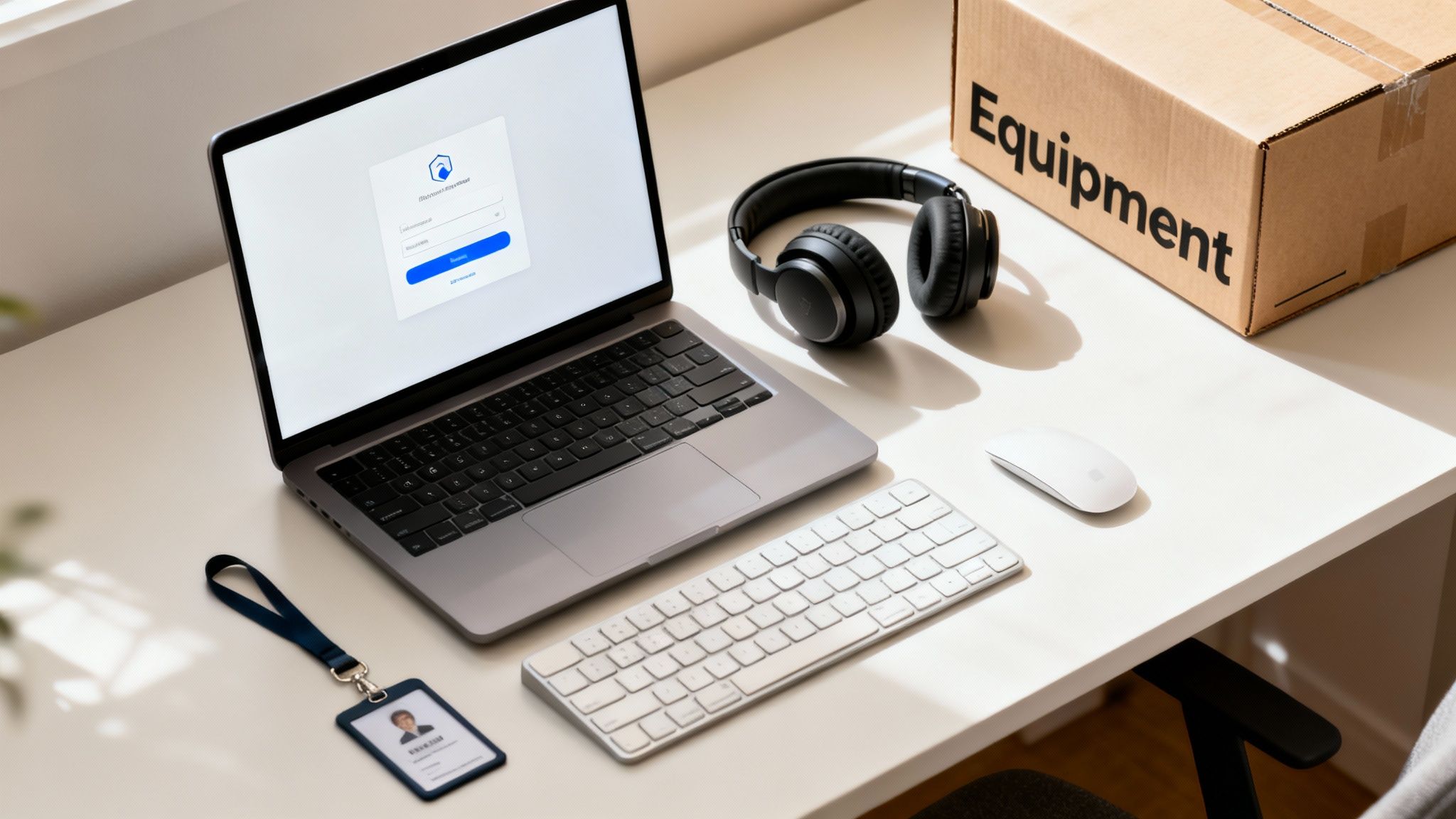
Nothing derails a new hire's enthusiasm faster than a first day spent waiting for IT support. Ensuring all necessary technology, software access, and workspace logistics are configured before arrival is a critical employee onboarding best practice. This proactive setup eliminates common technical frustrations, signals that the company is organized and values their time, and enables the employee to start engaging with their work immediately.
A seamless technical onboarding sets a professional tone from the very first minute. When a new hire can log in, access their email, and find their core software ready to go, it communicates competence and respect. This foundation of preparedness allows them to focus on learning and integration rather than troubleshooting, accelerating their path to productivity and reinforcing their decision to join the company.
How to Implement a Seamless Tech Setup
A structured checklist is the key to a flawless technical handoff. This process should begin the moment a candidate accepts an offer, not the day before they start.
-
Create an IT Onboarding Checklist. Document every single piece of hardware, software license, and system access a new hire needs for their specific role. Assign clear owners (e.g., IT, HR, hiring manager) and set deadlines for each task, with the final check completed at least 24 hours before the start date.
-
Provision Accounts and Deliver Equipment Early. Set up essential accounts like email, Slack/Teams, and project management tools in advance. For remote or hybrid employees, ship their laptop, monitor, and other peripherals to arrive 2-3 business days before their start date. This provides a buffer to resolve any shipping or setup issues.
-
Prepare a "Digital Welcome Kit." Don't just provide logins; provide context. Create a simple document or a "first day" channel with links to key tools, brief video tutorials for essential software, a list of important distribution lists to join, and clear contact information for the primary IT support person. This empowers the new hire to self-serve and reduces day-one dependency.
10. Weave Diversity, Inclusion, and Belonging into Onboarding
Embedding diversity, equity, inclusion, and belonging (DEIB) into your process is a critical component of modern employee onboarding best practices. This goes beyond a single training module; it means intentionally designing every step of the new hire journey to be welcoming, equitable, and respectful of different backgrounds and perspectives. The goal is to create an environment where every new employee, regardless of their identity, feels a true sense of belonging from day one.
A DEIB-focused approach ensures that diverse talent not only joins your company but also feels psychologically safe and empowered to thrive. It signals to new hires that their unique experiences are valued, which is directly linked to higher engagement, better retention, and more innovative teams. Companies like Salesforce and Accenture have demonstrated that integrating equality and inclusion initiatives directly into onboarding sets a powerful foundation for a positive employee lifecycle.
How to Implement a DEIB-Focused Onboarding
Start by auditing your existing process through an inclusion lens:
-
Introduce Employee Resource Groups (ERGs) Early. Make introductions to your ERGs a standard part of the first week's agenda. This provides new hires with immediate access to supportive communities and demonstrates your company's commitment to fostering networks for underrepresented groups.
-
Use Inclusive Language and Imagery. Review all onboarding materials, from offer letters to training decks. Ensure they use gender-neutral language, feature diverse imagery, and are accessible to people with disabilities. For example, ensure videos have captions and documents are compatible with screen readers.
-
Train Managers on Inclusive Onboarding. Equip managers and onboarding buddies with training on unconscious bias, microaggressions, and creating an inclusive team environment. They are the primary drivers of a new hire’s experience, and their awareness is crucial for fostering a sense of belonging.
To make this effective, gather feedback specifically on inclusivity. Use pulse surveys during the first 90 days to ask questions like, "Do you feel you can bring your authentic self to work?" or "Do you feel your unique perspective is valued on your team?" This data will provide clear insights into where your DEIB onboarding efforts are succeeding and where they need improvement.
10-Point Employee Onboarding Best Practices Comparison
| Approach | 🔄 Implementation complexity | ⚡ Resource requirements | ⭐ Expected effectiveness | 📊 Expected outcomes | 💡 Ideal use cases / Tips |
|---|---|---|---|---|---|
| Structured Onboarding Program | High — design, documentation, governance | High — cross‑team time and content creation | ⭐⭐⭐⭐ — strong, measurable | Consistent experience; faster productivity; lower early turnover | Create role‑specific tracks; schedule 30/60/90 checkpoints; assign phase owners |
| Dedicated Onboarding Buddy / Mentor | Low–Medium — pairing and oversight | Low — time commitment from experienced staff | ⭐⭐⭐⭐ — strong social & practical support | Faster cultural integration; informal knowledge transfer; improved belonging | Train buddies; set time expectations; avoid direct supervisors as buddies |
| Pre-Boarding Communication & Preparation | Low — templated communications and logistics | Low–Medium — coordination between HR/IT | ⭐⭐⭐ — improves readiness | Reduced day‑one admin; lower anxiety; better first impression | Send welcome within 24h; use a pre‑boarding checklist 2–3 weeks prior; personalize content |
| First‑Day & First‑Week Planning | Medium — cross‑dept coordination | Medium — events, schedules, leader time | ⭐⭐⭐⭐ — sets tone and early productivity | Structured itinerary; early relationships; reduced confusion | Provide a clear itinerary in advance; include leader welcome; avoid overloading schedule |
| Clear Role Clarity & Goal Setting | Medium — manager facilitation | Low–Medium — manager time to document goals | ⭐⭐⭐⭐⭐ — high impact on performance | Faster ramp; aligned expectations; accountability; improved retention | Hold role conversation in week 1; use SMART goals; document 30/60/90 targets |
| Training & Knowledge Transfer | High — curriculum design and delivery | High — LMS, content, trainer time | ⭐⭐⭐⭐ — accelerates competency | Consistent skills; fewer errors; compliance; reusable assets | Build modular training; include hands‑on practice and assessments; keep materials current |
| Regular Check‑Ins & Feedback Cycles | Low–Medium — scheduling and coaching skill | Low — manager time for recurring meetings | ⭐⭐⭐⭐ — prevents escalation, builds rapport | Early issue detection; guided progress; documented development | Schedule check‑ins in advance; use structured agendas; document action items |
| Cultural Immersion & Values Integration | Medium–High — authentic leader involvement | Medium — storytelling, events, leader time | ⭐⭐⭐⭐ — strong if authentic | Better cultural fit; higher engagement; values alignment | Have leaders share origin stories; show values in actions; include social activities |
| Technology, Tools & Workspace Setup | Medium — IT coordination and provisioning | Medium–High — hardware, licenses, IT time | ⭐⭐⭐⭐ — removes friction to start work | Immediate productivity; fewer tech delays; professional impression | Deliver equipment before start; test access; provide quick‑start guides and IT contact |
| Diversity, Inclusion & Belonging Focus | Medium–High — thoughtful design and follow‑through | Medium — training, ERG support, accommodations | ⭐⭐⭐⭐ — improves retention when genuine | More inclusive environment; better retention for underrepresented groups; increased innovation | Embed authentic practices; introduce ERGs early; provide accessibility and bias training |
From Welcome Email to Valued Team Member: Your Next Steps
Navigating the landscape of employee onboarding best practices can feel overwhelming, especially for a growing small business or startup where every hire is critical. Yet, as we've explored, transforming this process from a simple administrative checklist into a strategic, human-centric experience is not just beneficial, it's a fundamental driver of long-term success. It's the critical bridge between a promising candidate and a high-performing, engaged team member.
The journey doesn't end after the offer letter is signed. True integration begins with thoughtful pre-boarding, crystalizes during a meticulously planned first week, and solidifies over the first 90 days through consistent support and clear communication. The practices outlined, from establishing a structured program to fostering cultural immersion and assigning dedicated buddies, are not isolated tactics. They are interconnected components of a holistic system designed to make new employees feel welcomed, valued, and empowered from their very first interaction.
Turning Onboarding Theory into Practical Reality
The core takeaway is this: a great onboarding experience is an intentional one. It doesn't happen by accident. It requires a deliberate shift in perspective, viewing onboarding not as a cost center but as one of the highest-return investments you can make in your people. A well-executed program directly impacts retention, accelerates the time-to-productivity, and reinforces the very culture you're working so hard to build.
To get started, don't try to boil the ocean. Focus on incremental improvements that deliver immediate impact. Here are your actionable next steps:
- Audit Your Current Process (or Lack Thereof): Where are the gaps? What feedback have you received from recent hires? Identify the single biggest point of friction or confusion and target it first.
- Choose Your "Quick Win": Select one or two practices from this list to implement immediately. Perhaps it's formalizing your buddy program or creating a detailed first-week schedule. Small, visible changes build momentum.
- Map Your Knowledge: Document the essential information a new hire needs. Where does it live? Is it scattered across documents, buried in Slack channels, or locked in a senior employee's head? Centralizing this knowledge is a game-changer.
- Embrace Technology to Scale Human Connection: As you grow, manual processes become bottlenecks. Look for tools that automate administrative tasks and centralize information, freeing up your team to focus on what matters most: building relationships, mentoring, and providing meaningful feedback. An AI knowledge agent, for example, can handle repetitive questions 24/7, ensuring new hires get instant answers without feeling like they're a burden.
Key Insight: The ultimate goal of these employee onboarding best practices is to eliminate uncertainty for your new hire. When a person knows what to expect, understands their role, and feels connected to their team, they can channel all their energy into learning, contributing, and thriving.
Ultimately, investing in a robust onboarding framework sends a powerful message: "We are invested in your success." This commitment, demonstrated through structured planning, clear communication, and genuine support, is the foundation upon which lasting employee loyalty is built. It’s how you turn a new hire into not just a productive employee, but a passionate advocate for your brand and mission.
Ready to automate the repetitive parts of onboarding so you can focus on the human connection? The BizSage platform allows you to build a custom, on-brand AI knowledge agent in minutes, trained on your company's documents and culture. Give your new hires instant, 24/7 access to the answers they need, directly within Slack or Teams, by visiting BizSage to see how it works.